






 Release Time: 2025-06-03
 Page Views:31
In the 2024 Hebei Economic Work Conference, it was first mentioned that Hebei economy should give play to five advantages, build eight industries, namely, modern steel industry, green petrochemical industry, bio pharmaceutical industry, electronic information industry, new energy and intelligent connected automobile industry, robot industry, aerospace information and satellite Internet industry, and digital industry, and clarify the development direction of the industry one by one.
In the past decade, Hebei has adjusted its plans for key and leading industries several times, and the green chemical industry has entered the key industry sequence for the first time.
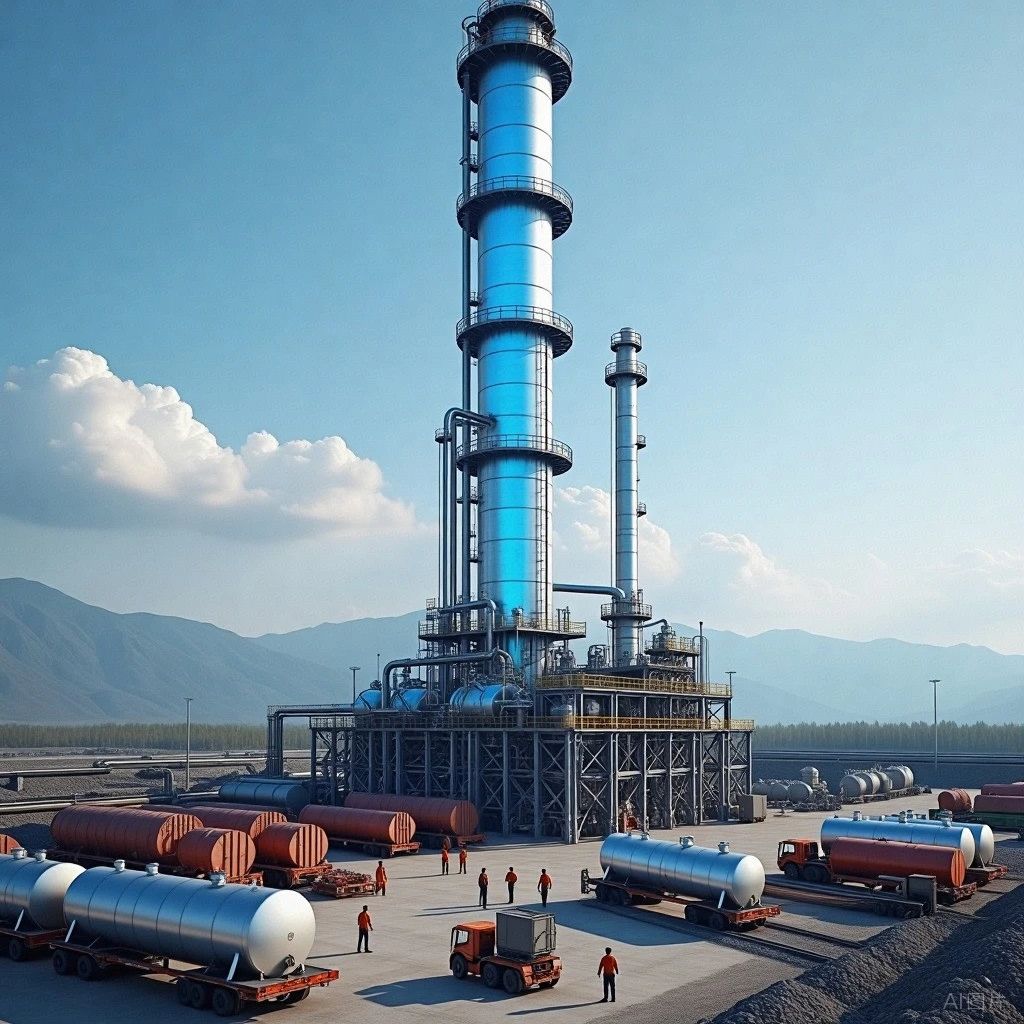
1、 Petrochemical industry is the third traditional advantageous industry in Hebei province
The petrochemical industry in Hebei Province is one of the important pillar industries in the province, and the third largest industry after steel and equipment manufacturing. It has a large scale and rapid development. The scale advantage of Hebei's traditional petrochemical industry is reflected in four dimensions: high concentration of production capacity, complete industrial chain, obvious regional cluster effect, and prominent status of large enterprises.
Despite facing the challenge of insufficient high-end production, its bulk chemical production capacity and coastal layout potential have laid a solid foundation for the transformation towards green petrochemicals.
According to the "Key Points for High Quality Development of Green Chemical Industry in Hebei Province by 2025", the scale of the petrochemical industry has exceeded 700 billion yuan. By 2024, there will be 2302 enterprises above designated size.
The petrochemical industry in Hebei Province, with refining as its core, has formed an industrial system covering multiple fields such as petroleum processing, basic chemicals, and fine materials. Petroleum processing focuses on refining and chemical integration, relying on leading enterprises such as Shijiazhuang Refining and Chemical (8 million tons/year) and CNOOC Zhongjie Petrochemical (5 million tons/year) to produce finished oil and basic chemical raw materials such as polypropylene and toluene. The production capacity of basic chemicals is outstanding.
The production capacity of soda ash and caustic soda ranks among the top in the country, with output reaching 3.2 million tons and 2.8 million tons respectively in 2022, accounting for 12% and 8% of the total national output. In the field of synthetic materials, PVC production capacity reaches 2 million tons per year, and nylon 6 slicing production capacity exceeds 500000 tons per year, forming a vertical chain from raw materials to end products. The focus of the fine materials field is on the layout of synthetic rubber, high-end polyester, electronic chemicals, etc., to promote the extension of the industrial chain to the high-end.
From the perspective of regional layout, the proportion of petrochemical production value in coastal areas has increased to 60%. The petrochemical industry in Hebei Province is centered around the integration of refining and chemical industries, with a focus on four major industrial bases: Tangshan Caofeidian, Cangzhou Bohai New Area, Shijiazhuang Circular Chemical, and Xingtai Coal Salt Chemical. Among them, Caofeidian Petrochemical Base has formed a production capacity of 40 million tons of refining, 4 million tons of ethylene, and 5.5 million tons of PX, developed new chemical materials and fine chemicals, and built a world-class port petrochemical industry base.
Cangzhou Bohai New Area focuses on synthetic materials and develops high-end chemical products such as polyurethane (PU) and polycarbonate (PC). The Bohai New Area base focuses on building an important synthetic material base in the north, promoting the construction of major projects, and increasing the supply of basic organic chemicals.
The Shijiazhuang base focuses on new chemical materials and specialty chemicals, relying on the construction of the Shijiazhuang Circular Chemical Park. These industrial bases form a relatively complete petrochemical industry chain and are committed to building a leading green development demonstration zone for the petrochemical industry in China.
The Xingtai Coal Salt Chemical Industry Base is an important gathering area for the chemical industry in North China. With abundant rock salt and coal resources, it has formed an industrial chain centered on soda ash chemical, chlor alkali chemical, and coal chemical industries.
Hebei supports the construction, renovation, and expansion of upstream and downstream projects in key chemical monitoring points in various regions, aiming to build the petrochemical industry into a trillion yuan industry.
In terms of industrial upgrading, Hebei Province is promoting the strategy of "reducing oil and increasing chemical production", reducing the output of refined oil products and increasing high value-added chemical products such as olefins and aromatics. At the same time, we will accelerate the green transformation and develop new materials such as biodegradable plastics and electronic chemicals. By 2025, the revenue of the new materials industry will reach 300 billion yuan.
Overall, the petrochemical industry in Hebei Province is developing towards high-end, green, and clustered directions, becoming one of the important petrochemical industry bases in the country.
2、 A group of leading industrial enterprises are rising
The petrochemical industry in Hebei Province has formed a number of leading state-owned and private enterprises, supporting the development of the entire industry. Hebei Petrochemical has a high concentration of production capacity, with prominent roles played by top enterprises: Shijiazhuang Refining and Chemical, Cangzhou Refining and Chemical, Tangshan Xuyang and other enterprises account for more than 70% of the province's production capacity, possessing the advantage of large-scale production.
(1) Central state-owned enterprises leading refining and chemical enterprises
1. Sinopec Shijiazhuang Refining and Chemical Branch
The predecessor Shijiazhuang Refinery was established. It has been listed on the Shenzhen Stock Exchange. At present, the primary processing capacity of crude oil in the refining section reaches 8 million tons per year, and the comprehensive supporting capacity of the entire process reaches 4.2 million tons per year. It has 28 sets of refining production units, 11 sets of chemical production units, and 18 sets of environmental protection facilities. The primary processing capacity of crude oil is 5 million tons per year, producing more than 50 products such as gasoline, diesel, aviation kerosene, and polypropylene. It is an important refining base in North China. In February 2023, the green transformation and development project officially started construction. The project has an investment of 10.8 billion yuan and is expected to be completed and put into operation in the second half of 2025, achieving the transformation from a "fuel type" refinery to a "new material" refinery.
2. CNOOC Zhongjie Petrochemical Co., Ltd
It is a third level unit of China National Offshore Oil Corporation Limited. The total assets are 4.5 billion yuan, and the total number of employees is 1081. The primary processing capacity of crude oil is 6.5 million tons per year, with a comprehensive processing capacity of 5 million tons per year. There are a total of 16 main units, and it is a refining enterprise that integrates petroleum processing and fine chemicals, and has the national qualification for wholesale operation of refined oil products. The core products include gasoline, diesel, polypropylene, and methyl ethyl ketone, filling the production capacity gap of methyl ethyl ketone in North China and building an integrated system of "refining storage transportation".
3. Cangzhou Dahua Group Co., Ltd
It is a second tier enterprise of China National Chemical Corporation Limited. Its predecessor was Hebei Cangzhou Fertilizer Plant, one of the first 13 large fertilizer enterprises in China to construct a complete set of imported equipment. In 2006, it completed asset restructuring with China National Chemical Corporation and entered the ranks of state-owned enterprises. Cangzhou Dahua is one of the largest TDI production enterprises in China, ranking among the world's four major producers. It is a leading enterprise in the domestic isocyanate industry, and its product quality has reached the international advanced level.
(2) Local large state-owned enterprises
1. Tangshan Sanyou Chemical Co., Ltd.:Hebei Province is a key chemical backbone enterprise and a leading enterprise in the national soda ash and chemical fiber industries. It has strong strength and market competitiveness in the production of soda ash, chemical fibers and other products.
2. Kailuan (Group) Co., Ltd.:A super large energy and chemical enterprise, a pillar enterprise in the chemical industry of Tangshan City, with traditional advantages in coal mining and washing, and strong capabilities in coal chemical and other fields.
(3) Top private enterprises
1. Hebei Xinhai Chemical Group.Headquartered in Bohai New District, Cangzhou City, Hebei Province, it is a large private enterprise group integrating petroleum processing, chemical new material production, crude oil trade, logistics and warehousing. It is one of the 82 local oil refining enterprises registered and retained by the National Development and Reform Commission. For consecutive years, it has been awarded honors such as "Top 100 Enterprises in Hebei Province" and "Top 500 Manufacturing Enterprises in China"; The company currently has over 1500 employees and aims to achieve a sales revenue of 116 billion yuan by 2024. In recent years, Xinhai has accelerated its transformation towards high-end chemical new materials, investing 25.4 billion yuan to build a chemical new material base in 2024 to produce high value-added products such as aromatics, olefins, and epichlorohydrin. It is expected that the annual sales revenue after investment in 2026 will reach 200 billion yuan. In the future, Xinhai plans to invest 30 billion yuan to expand a 10 million ton integrated refining and chemical project, further consolidating its leading position in the petrochemical industry in the Beijing Tianjin Hebei region.
2. Hebei Xuyang Group.After years of development, it has become a large enterprise group that integrates the coordinated development of business sectors such as coke, chemical, new energy, and new materials. The group has 9 production parks located in Hebei, Shandong, Inner Mongolia, Jiangxi and other places, and provides operational management services to multiple companies. Starting from coke, three chemical industry chains have been formed, including carbon materials, alcohol ammonia, and aromatic hydrocarbons, which can produce 55 types of products in 5 categories. It is the world's largest independent coke producer and supplier, and the second largest producer of caprolactam, occupying a leading position in multiple product fields in China. In 2024, the group's sales revenue was 47.5 billion yuan. The group attaches great importance to R&D innovation and has established a three-level R&D innovation system, with product quality leading the industry.
3. Hebei Chengxin Group Co., Ltd.Established in 1990, headquartered in Yuanshi County, Shijiazhuang City, Hebei Province, it is a large-scale fine chemical manufacturing enterprise that integrates research and development, production, sales, logistics, and technical services. It focuses on the research and production of cyanide and its derivatives, and is one of the top 500 enterprises in China's petroleum and chemical industry and one of the top 100 enterprises in China's fine chemical industry. In 2024, it achieved sales revenue of 43.8 billion yuan. The group has built a circular economy industry chain with hydrogen cyanide as the core, covering more than 160 products such as sodium cyanide, melamine, phenylacetonitrile, phenylacetic acid, esters, etc. The products are widely used in fields such as pesticides, pharmaceuticals, electroplating, metallurgy, and daily chemical products. Its sodium cyanide production capacity is leading in the country.
4. There are a total of 12 petrochemical concept listed companies in the petrochemical sector, A-shares, and Hong Kong, forming an industry matrix driven by innovation and green transformation.They include Cangzhou Dahua, Sanyou Chemical, Jizhong Energy, Xinao Group, Cangzhou Mingzhu, CSSC Special Gas, Caike Chemical, Meihua Biology, Jianxin Group, Sanfu Group, Longxing Chemical, and Hong Kong listed company Dongguang Chemical.
3、 Major chemical industrial parks in Hebei Province
Hebei Province has identified 38 chemical industrial parks (3 professional parks+35 concentrated areas), forming an industrial pattern of "three cores leading and multi pole linkage". Form an industrial layout covering the entire province.
Caofeidian, Bohai New Area, and Shijiazhuang Circular Chemical Industry Park, as the three core bases, plan to invest over 100 billion yuan in 2025, focusing on promoting 20 major projects such as the green transformation of Sinopec, Xinhai Chemical New Material Base, and Tangshan Sanyou New Energy Materials. The goal is to build an integrated refining and chemical, high-end new materials, and fine chemical industry cluster.
Cangzhou Lingang Economic and Technological Development Zone and Renqiu Petrochemical Concentration Zone have been selected as one of the top 100 comprehensive competitive industrial parks in China in 2024, ranking 12th and 64th respectively, demonstrating their leading position nationwide. Cangzhou Lingang Development Zone has been listed as one of the top 30 chemical industrial parks in China for 11 consecutive years, and is a national level green park and circular economy demonstration zone.
(1) Cangzhou Lingang Economic and Technological Development Zone
Ranked 12th nationwide (Top 100 Comprehensive Competitiveness of Chemical Industrial Parks in 2024), it has been selected as one of the "Top 30 Chemical Industrial Parks in China" for 11 consecutive years and is a national level green park and circular economy demonstration zone. Focusing on the fields of synthetic materials and biomedicine, we have leading enterprises such as Xinhai Chemical (6 million tons/year refining) and Kaiyi New Materials (million tons of ethylene). By 2025, we plan to build a million ton high-end polyolefin project, with an expected increase in output value of 30 billion yuan.
(2) Renqiu Petrochemical Concentration Zone
Ranked 64th nationwide, with a planned area of 8.32 square kilometers, the industrial positioning is mainly focused on the integration of petroleum refining and new material industry chain cluster development, relying on China Petroleum North China Petrochemical Company to create a green petrochemical industrial park. There are four major chemical enterprises in the park, including PetroChina North China Petrochemical Company, Jiujiu Company, Jiuhuan Company, and Hebei Shengteng Technology Company. The plan is to achieve a total industrial output value of 55 billion yuan by 2025 and 100 billion yuan by 2035.
4、 Realize the green transformation from a "major chemical province" to a "strong chemical province"
The petrochemical industry in Hebei has long been plagued by the problem of "low-end surplus and high-end shortage", with products mainly consisting of basic chemicals and low added value. According to the relevant person in charge of the Provincial Petroleum and Chemical Industry Association, the production capacity of traditional industries such as synthetic ammonia, urea, caustic soda, and soda ash in Hebei Province is constantly increasing, while there are relatively few high value-added products such as new chemical materials, specialty chemicals, and modern coal chemical industry.
After the "dual carbon" target was proposed in 2020, the traditional petrochemical industry is facing pressure to reduce emissions and needs to transform towards green and low-carbon. Hebei, as a major province in steel and chemical industries, urgently needs to reduce carbon emission intensity through green transformation.
Hebei has listed green petrochemicals as a provincial key industry for the first time, with development goals focused on three core directions: industrial green transformation, technological innovation driven, and industrial chain optimization and upgrading, aiming to build a modern green chemical industry system.
(1) Clarify the direction of industrial green transformation
1. Promote orderly oil reduction and increase, tilt crude oil processing capacity towards basic chemicals such as ethylene and propylene, and focus on developing high-end products such as synthetic resins and synthetic rubber. Reduce the proportion of refined oil products and achieve the transformation of "fuel type" refineries to "new material" refineries; Implement the coal chemical industry chain extension action, support coal chemical deep processing enterprises, expand the scale of crude benzene refining, and strengthen the methanol and coal tar industry chain. By phasing out outdated refining capacity.
2. Strengthen the fine chemical industry, encourage the development of industries such as green pesticides, environmentally friendly coatings, and environmentally friendly dyes, develop fine chemicals such as surfactants, focus on high value-added, import substitution, and filling domestic gaps to develop high-end fine chemicals, and promote the integration of biotechnology and fine chemical industry; Around emerging industries, with high-performance chemical new materials as the development direction, accelerate the development of products such as organic fluorosilicon, polyurethane, polyoxymethylene, polycarbonate, biobased materials, biodegradable plastics, and specialized lubricants.
3. Accelerate the development of new materials, with high-performance rubber, high-performance resin, high-performance fiber and composite materials, membrane materials, electronic chemicals and other chemical new materials as the development direction. Develop high-end fine chemicals, biodegradable plastics, electronic chemicals and other high value-added products, and lay out emerging fields such as biobased materials. Develop electronic chemicals (such as high-purity reagents) and biobased materials (PLA/PHA), and increase the proportion of new material output value to 30% by 2025.
(2) Optimize industrial layout
1. Building three major bases
(1) Caofeidian Base - Petrochemical Salt Integration Demonstration Zone
Relying on the advantages of deep-water ports, we will focus on promoting the coupled development of the petrochemical and salt chemical industry chains, and plan to build a 50000 ton liquid chemical terminal to strengthen logistics support. Focusing on the field of new chemical materials, developing characteristic products such as marine anti-corrosion coatings and high-end polyvinyl chloride, and creating an important fine chemical industry cluster in the north. At present, Sanyou Group is promoting key projects such as 400000 tons/year PVC, and building a circular industrial chain of "raw salt caustic soda organic chlorine products".
(2) Bohai New Area Base - Innovation Highland of Synthetic Materials
Led by projects such as Xinhai Chemical's 3.8 million tons/year heavy-duty asphalt and Kaiyi Petrochemical's 300000 tons/year caprolactam, the focus is on breaking through bottleneck materials such as polyurethane raw materials (MDI) and nylon 66. Simultaneously building a new material pilot base, promoting the transformation of scientific research achievements, with the goal of forming a high-end synthetic material production capacity of 2 million tons per year, serving downstream industries such as automobiles and equipment manufacturing in the Beijing Tianjin Hebei region.
(3) Shijiazhuang Base - Benchmark for Green Transformation
Taking the transformation of stone refining as an opportunity, develop environmentally friendly materials such as epoxy resin and polyamide. The circular chemical park focuses on building a "coalification petrochemical" dual wheel drive model, reducing emissions through carbon capture and utilization technology, planning and constructing hydrogen energy demonstration projects, and creating a low-carbon chemical model. At present, the construction of projects such as nitrile and electronic grade epoxy resin has accelerated, and it is expected that the output value of new materials will exceed 30 billion yuan by the end of the 14th Five Year Plan.
The three major bases achieve coordinated development through differentiated positioning, jointly promoting the transformation of the petrochemical industry in Hebei Province towards high-end, green, and clustered development. It is expected to form a modern industrial system with an output value of over 500 billion yuan by 2025.
2. Strengthen the construction of the park.Standardize and enhance the park, explore the management model of "Development Zone Management Committee+Specialized Institutions", strengthen the construction of specialized infrastructure for hazardous chemical storage and transportation, and promote the specialized, characteristic, circular, and coupled development of the park. Build a smart park platform that integrates production scheduling, safety and environmental protection, energy management and control systems, and pilot AI inspection and digital twin technology.
The Caofeidian Chemical Industrial Park focuses on developing high-end petrochemicals and new materials. Create a shared pipeline corridor for 'raw material air transportation' to achieve seamless connection between upstream and downstream materials. By 2025, a billion dollar industrial cluster will be formed.
Cangzhou Bohai New Area Lingang Economic and Technological Development Zone is building a northern synthetic material base, focusing on the integration of coal chemical industry and new materials.
Shijiazhuang Circular Chemical Industry Park promotes the green transformation of petrochemical industry, adding 150000 tons/year of electronic grade epoxy resin production capacity. Construct the Sinochem International New Materials Industrial Park and develop high value-added products such as pharmaceutical intermediates and UV cured materials.
Handan Cixian Economic Development Zone is positioned as a benchmark for new materials in the circular chemical industry, building a closed-loop system of "coal tar carbon black tail gas power generation", with a comprehensive resource utilization rate of over 90%. Introducing enterprises such as Sinochem Fuding, we have developed high-end products such as photoinitiators and quinones, with a global market share of over 60%.
Actively layout fine chemical industrial parks. We will focus on promoting the construction of three professional parks, namely Tangshan Sanyou Industrial Park High end Electronic Chemicals Industrial Park, Sodium Ion Battery Materials Industrial Park, and Fine Chemical Industrial Park, as well as Cangzhou Lingang Economic Development Zone Electronic Chemicals Industrial Park, Cangzhou High tech Zone Membrane Materials Industrial Park, and Handan Electronic Special Gas Industrial Park. We will also promote the extension and supplementation of the coking industry chain in Xingtai Xuyang Chemical Park and Tangshan Haigang Chemical Park.
(3) Building a three chain integrated industrial chain
Promote the "three in one" (petrochemical, coal chemical, salt chemical) circular system and form a circular economy industrial system. Petrochemical industry is based on crude oil processing, producing basic chemical raw materials such as ethylene, propylene, and aromatics. Extending downstream to high value-added products such as synthetic resins, synthetic rubber, and synthetic fibers.
Salt chemical industry is centered around the chlor alkali industry, producing basic chemicals such as caustic soda, chlorine gas, hydrogen gas, and extending to fine chemical products such as PVC (polyvinyl chloride), epichlorohydrin, and methane chloride. Coal chemical industry is based on coal vaporization and liquefaction technology, producing methanol, synthetic ammonia, coal to olefin, etc., extending to ethylene glycol, vinyl acetate, coal based new materials, etc. At the same time, it extends the emerging industrial chains such as new chemical materials, fine chemicals, electronic chemicals, synthetic biology, and hydrogen energy. Plan to build high-end projects such as magnesium based new materials and pharmaceutical grade chemicals.
(4) Major project traction
Hebei Province is accelerating a number of key projects in the transformation and upgrading of the petrochemical industry. The total investment in key petrochemical projects is expected to exceed 100 billion yuan by 2025, with a focus on building a modern industrial system. The following is the construction status of key projects.
1. Investment and construction of major industrial projects
(1) Shijiazhuang Refining and Chemical Green Transformation Project: With a total investment of 10.2 billion yuan, the project focuses on the construction of 300000 tons/year polypropylene, 200000 tons/year styrene and other projects. It is expected to add an additional output value of 15 billion yuan after completion and operation in 2025.
(2) Xinhai Chemical New Materials Base: With a total investment of 25.4 billion yuan, it plans to construct 600000 tons/year PDH plants, 300000 tons/year polypropylene plants, and other facilities. After completion, it will form a chemical new materials industry cluster with an annual output value of 30 billion yuan.
2. Basic raw material guarantee project
(1) Xuyang Group's 300000 tons/year caprolactam project: with an investment of 8.5 billion yuan, supporting the construction of a 200000 tons/year nylon 6 slicing device.
(2) Huafeng Energy Coking Deep Processing Project: Investment of 5.2 billion yuan, focusing on the development of crude benzene refining and coal tar deep processing industry chain.
(3) Zhongrun Coal Chemical New Materials Project: Investment of 4.8 billion yuan, construction of a 200000 ton/year methanol to olefin plant.
3. Industrial Chain Extension Project
(1) Caike Chemical Electronic Chemicals Project: Investing 3.5 billion yuan to build a 50000 ton/year electronic grade chemical production line.
(2) Hebei Chengxin Fine Chemical Project: Investment of 2.8 billion yuan, focusing on the development of pharmaceutical intermediates, pesticide raw materials and other products.
(3) Parrett Gas Special Gas Project: Investing 2.2 billion yuan to build a semiconductor grade electronic special gas production base.
Industrial Supporting Upgrade Project
(4) Caofeidian 50000 ton liquid chemical terminal: investment of 1.8 billion yuan, expected to be completed and put into use by 2025.
(5) Bohai New Area Chemical Pipe Gallery Project: Investment of 1.5 billion yuan, connecting major enterprises in the park.
By 2025, the total investment in key projects of the petrochemical industry in Hebei Province is expected to reach 120 billion yuan, with a focus on cultivating more than 10 chain leading enterprises with an output value exceeding 10 billion yuan, and creating more than 5 characteristic chemical industry clusters. Through the implementation of these projects, the basic chemical raw material guarantee capacity of Hebei Province will be significantly improved. The production capacity of olefin products such as propylene and butadiene will increase by more than 40%, and the production capacity of aromatic hydrocarbon products such as benzene and xylene will increase by 30%, providing strong support for the development of downstream new material industries.
(5) Strengthening innovation drive and breakthroughs in key technologies
Building an innovation platform: constructing a "trinity" collaborative innovation system consisting of key laboratories, innovation centers, and common technology research and development institutions. Strengthen cooperation with research institutions in universities in Beijing and Tianjin, establish the Yanzhao Green Chemical Laboratory, and focus on tackling key core technologies such as efficient catalysis. Research and develop management methods for chemical pilot bases and pilot projects to solve the problem of difficult implementation of pilot projects.
Promote green transformation: Encourage enterprises to adopt clean production technologies and equipment, and strengthen the connection between bio based bulk chemicals and the existing chemical materials industry chain. Promote the coupled development of the petrochemical industry with building materials, metallurgy and other industries, and promote the regeneration and recycling of waste chemical materials. Scientifically recognize green design products, green factories, etc., and build a full lifecycle green manufacturing system. Promote digital empowerment: Accelerate the construction of production process data integration and intelligent manufacturing platforms, promote the construction and application of identification resolution nodes, promote the integration of new generation information technologies such as 5G, big data, and artificial intelligence with the petrochemical industry, build production and operation analysis models, and promote pilot demonstrations of digital transformation.
Overcome technical difficulties, tackle common technologies such as efficient catalysis and biomanufacturing, and promote the industrialization of bio based materials (such as polylactic acid) and electronic chemicals (photoresist, packaging materials). Promote carbon capture technology, such as Hebei Jiantao Energy's carbon dioxide capture and conversion project (conversion rate of 95%), and create a regional carbon neutrality demonstration park.
Cultivate innovative entities: Strengthen the cultivation of individual champion enterprises and specialized and innovative "little giant" enterprises, support chain leading enterprises such as Caike Chemical and Hebei Chengxin, focus on upstream and downstream layout of key enterprises, and cultivate chain leading enterprises.
Build 2-3 national level green chemical demonstration parks and cultivate more than 10 billion dollar chain leading enterprises.
 WeChat Official Account
Website QR code
WeChat Official Account
Website QR code


 0312-8425889


 简体中文
简体中文 English
 Русский язык


 Home
Home
